


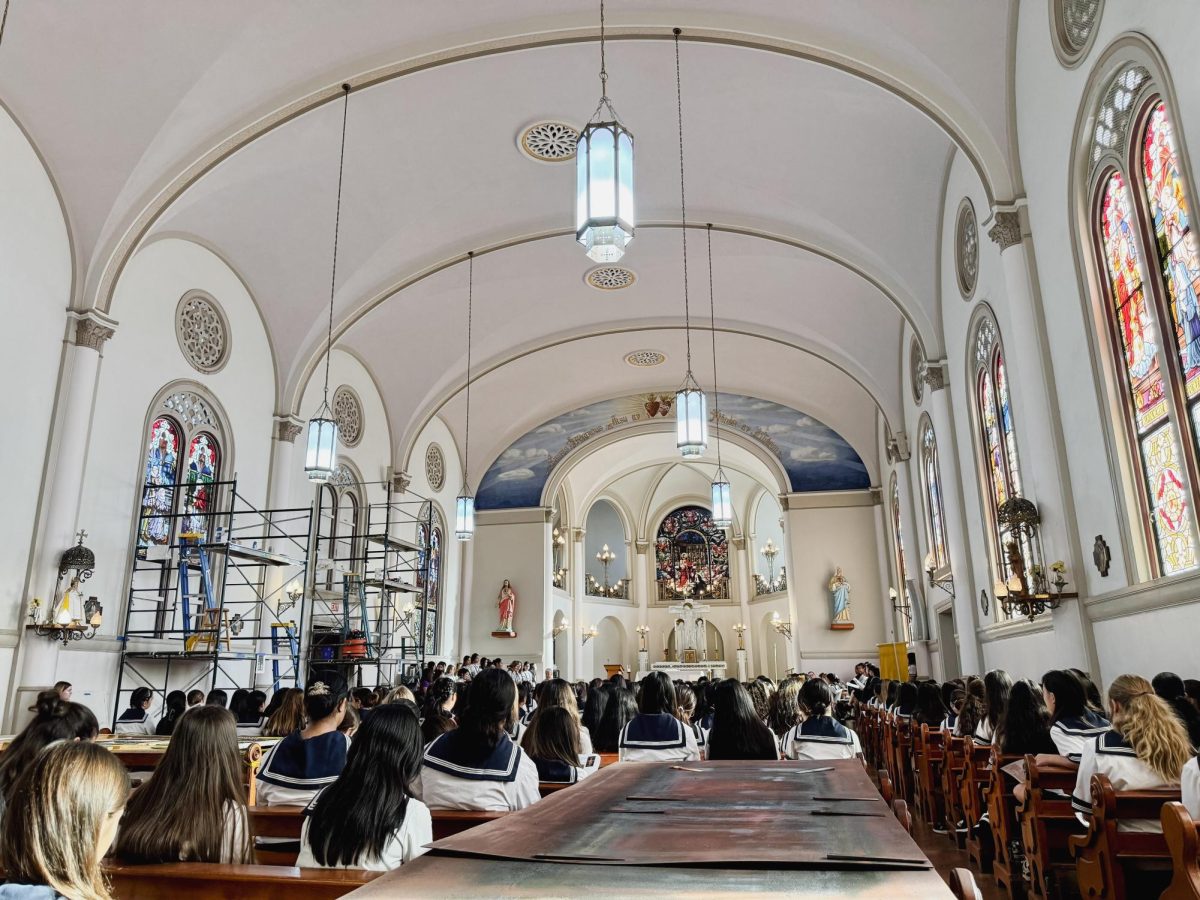

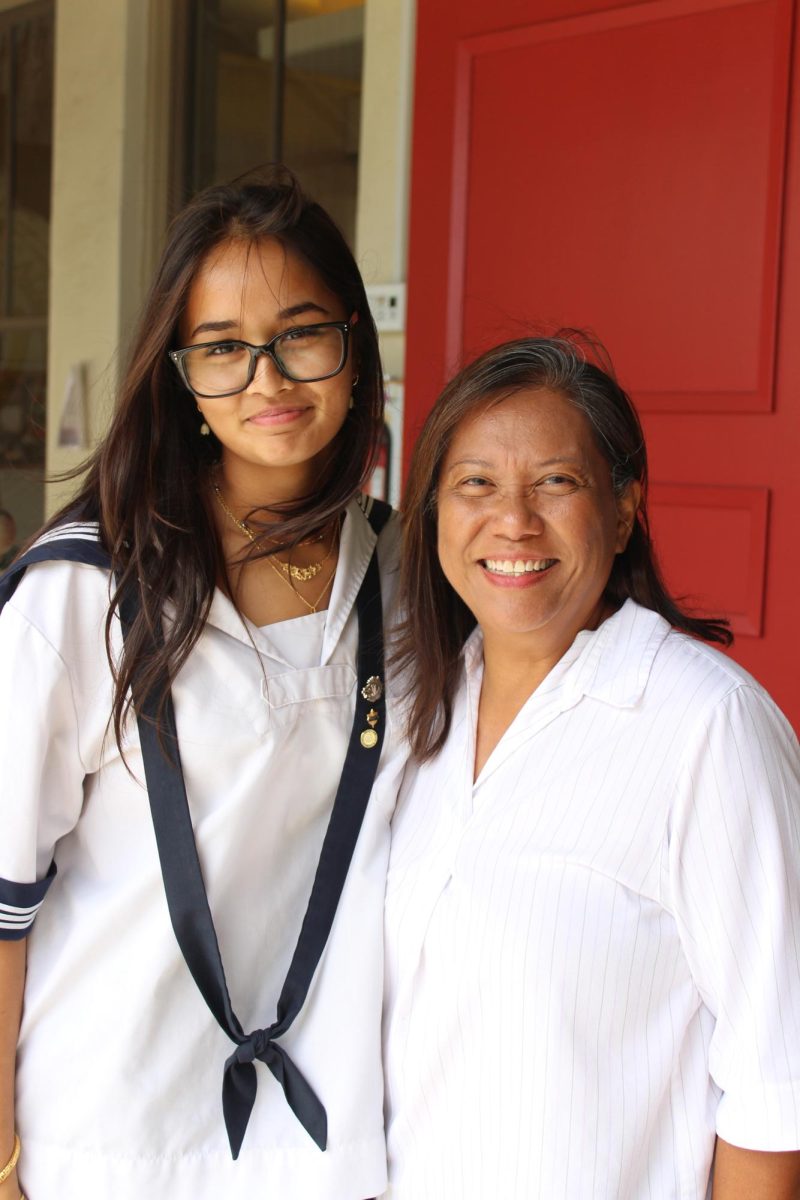









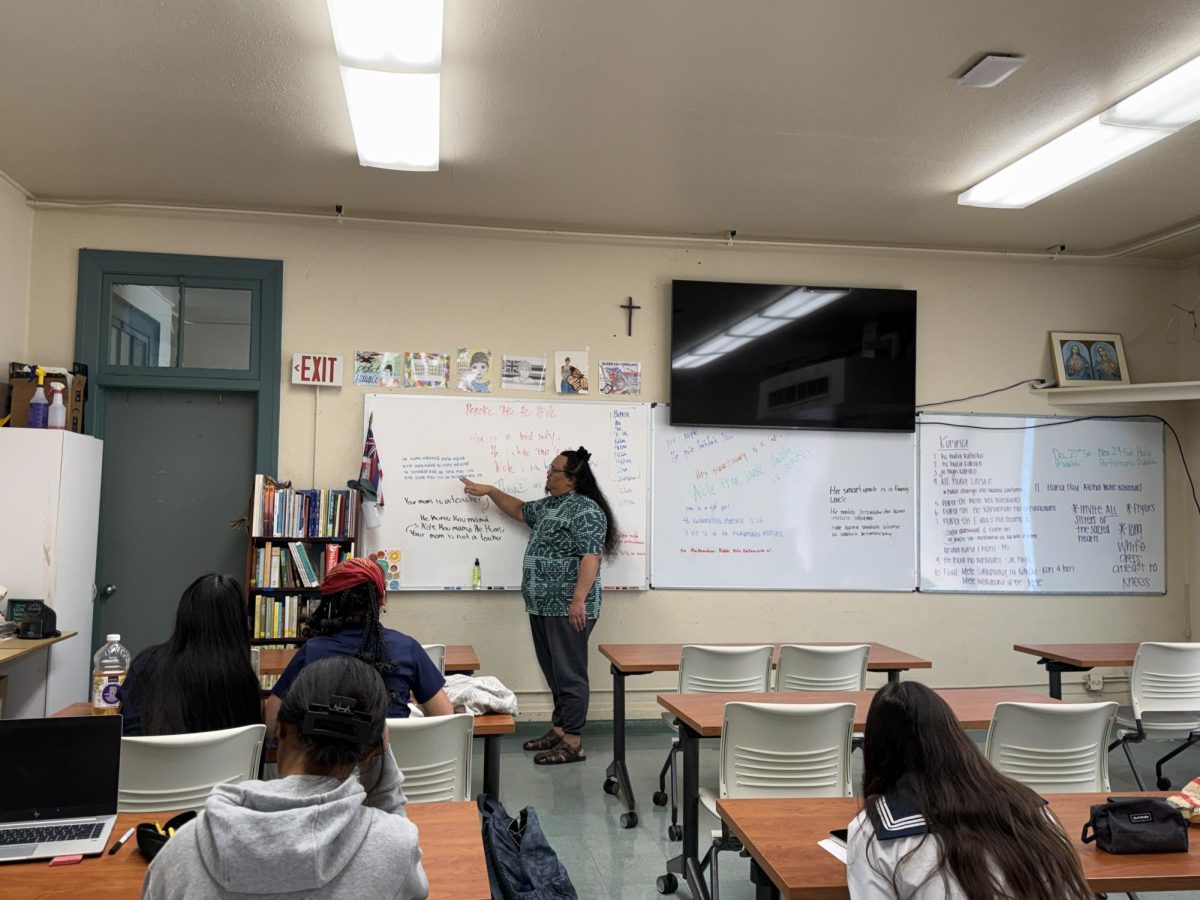
When Hawaiian Language teacher Jordan Asing stepped back onto Sacred Hearts Academy campus this year, he said the welcome he received was like he never left. After teaching for about 13 years, six previously at the Academy, his return has sparked excitement among both students and faculty, who were excited to reconnect with his passion for the Hawaiian language and culture.
Asing shared that the most heartwarming part of coming back was the strong support from staff members. “Sister Katherine embodies joy and aloha,” he said, adding that longtime Lancer math teacher Deborah Kula also offered one of the warmest welcomes when he returned to the Academy.
Compared to the previous school that he was at, where all of the students were required to learn Hawaiian, Asing noticed a meaningful difference at the Academy.
“Here, students chose to learn Hawaiian,” he said. “That means they want to be here; they want to learn the language.” For him, that makes teaching more rewarding, as he works with students who are eager to learn the culture, whether they are Hawaiian or not.
Part of his mission remains the same: ensuring students understand and respect the place they call home. “I’d like to see Sacred Hearts cherish the land of Hawaii a little bit more,” Asing said.
While many students already embrace cultural learning through songs and morning dances, he hopes to continue strengthening that connection. Kumu enjoys incorporating mele into his daily lessones; “Mele are more than words with melodies to them; they are repositories of knowledge. We can learn a lot about our culture and history by learning and analyzing mele. Additionally, mele brings out the voice within. Mele are meant to be heard, felt, and seen. Everyone loves music so we will use this tool as a returning pathway to the reclamation of ʻōlelo Hawaiʻi, moʻolelo, and lawena.”
One of those students is senior Hayden Tang Mauricio, who said, “It felt different, but in a good way. It was a lot on the first day when he taught us to oli (chant) right away.”
Mauricio said that his teaching style stands out from previous teachers because he focuses on strengthening beginner-level sentence patterns instead of rushing through material. As a result, students feel more confident as they progress. Asing also brings more oli into the daily teaching, Mauricio said. She had only learned one oli before this year, and she now starts class with five.
Beyond language structure, Asing incorporates Hawaiian history and leadership into his lessons. The recent oli that the Hawaiian class students presented at flag assemblies encouraged many students to learn more about the legacy of past Hawaiian chiefs. Mauricio said that her favorite class project so far has been preparing for a Hawaiian chief’s birthday celebration.
“We did a lot of research, and I learned so much more than I expected,” she said.
While Asing is grateful to return, he did note one surprising change: the absence of many former faculty members who had either retired or moved on during his time away from the Academy. Though he was hoping to reconnect with past colleagues, he is now focusing on building new relationships and reinforcing Hawaiian culture on campus.
