

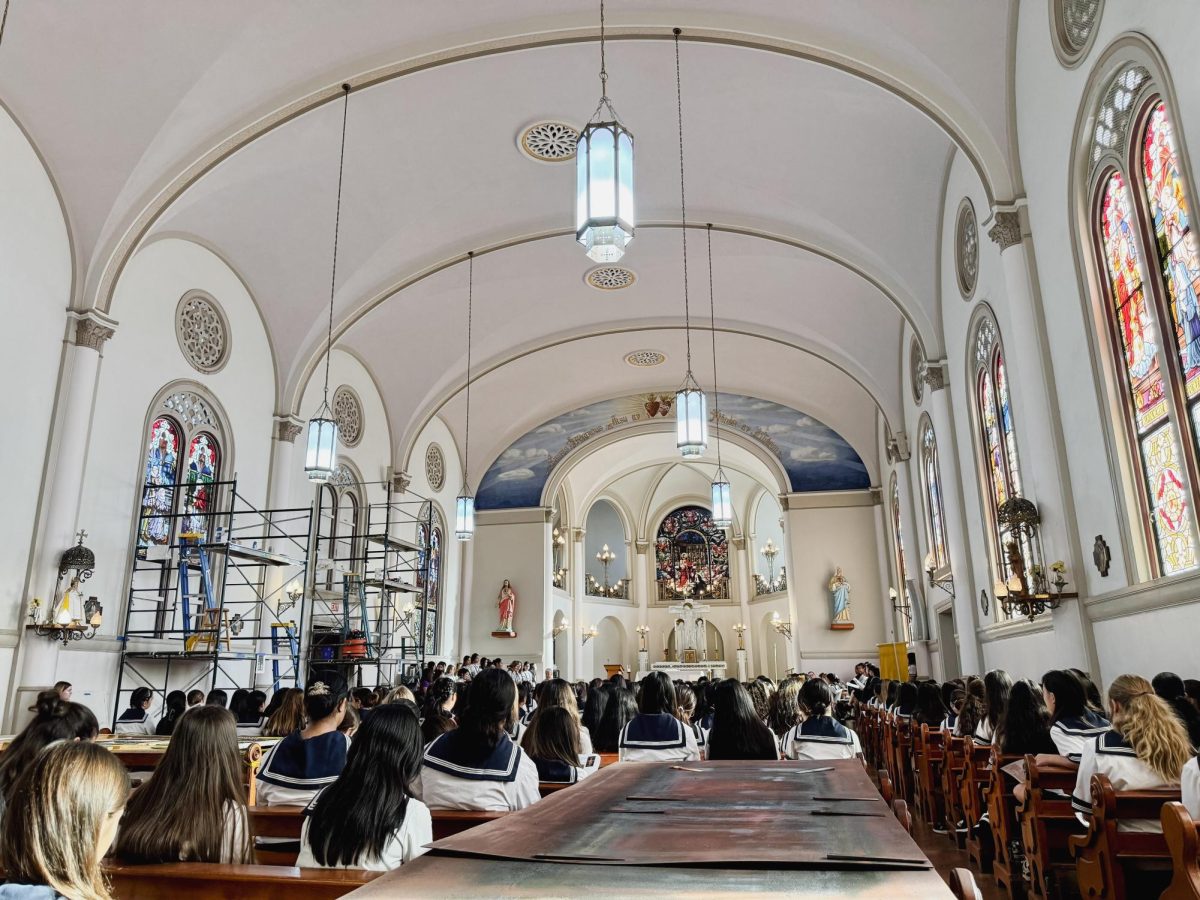














A power outage that shut down electricity across Sacred Hearts Academy and surrounding neighborhoods yesterday disrupted classes, cut air conditioning and internet access and prompted teachers and students to quickly adjust as campus leaders worked to keep school operating safely.
The outage began shortly after 9 a.m. and affected about 2,200 customers in parts of Kaimuki and Waikiki, according to Hawaiian Electric. Power was restored to campus shortly after noon, following several delays in estimated restoration times as crews repaired a damaged underground cable.
Upper School Principal Elizabeth Loehr said the school communicated updates to families and faculty throughout the morning, even as the loss of electricity made it difficult to receive or return calls.
“Many parents wanted to check in or pick up their children, so most communication happened directly between students and their families,” Loehr said, noting that students used their personal cell phones during the outage.
Junior Aleia-Reese Nakoa recalled how she and her friends reacted to the outage.
“I was irritated because it was hot, and I wanted to go home,” she said. “Six of my friends went home early.”
While some students chose to leave early, school administrators emphasized that classes remained in session.
“Just because the power’s out doesn’t mean that school is automatically over or that you can leave campus at any time,” Loehr said. “You still have to attend classes unless you are notified that you may leave.”
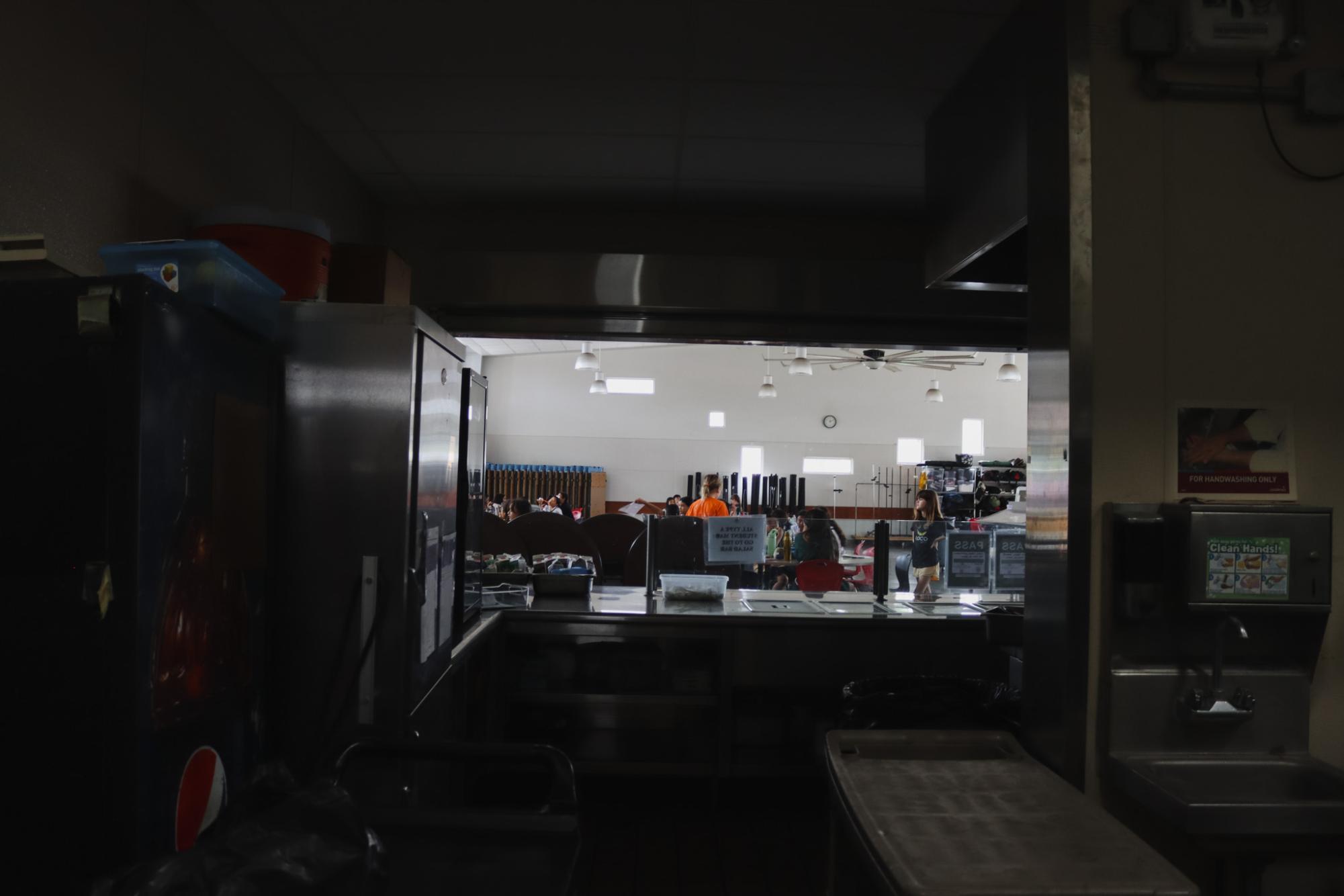
Decisions about school closures depend on school administration and are based on several factors, including safety, facility conditions and whether meals can be served. Many schools follow similar emergency decision frameworks used during weather events or utility outages. In this case, the Academy’s cafeteria operated using a generator, allowing meal service to continue without interruption.
A letter was emailed to faculty, staff and families confirming that food service was not affected and therefore, the campus would remain open during the outage.
Teachers adapted to the situation in various ways. With classrooms no longer air-conditioned, several teachers moved their lessons outside. Theology teacher Leilani Asuncion-Tagupa had students take their religion tests in front of their third-floor classroom.
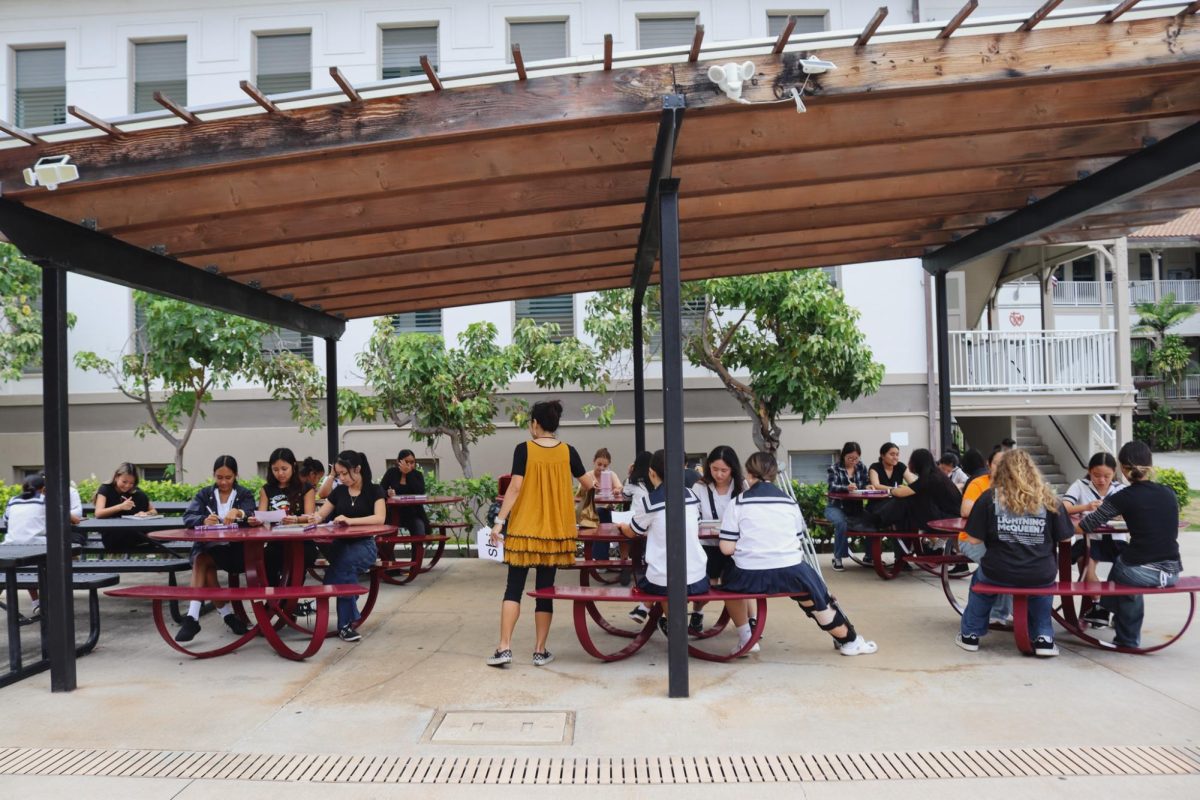
Japanese teacher Nami Grafia also relocated her Japanese 1 class to the outdoor tables near the Student Center.
“This class has 25 students, and without air conditioning, it quickly became hot,” Grafia said. “It was difficult to focus or continue learning, so we decided to move outdoors for a more comfortable and productive environment.”
Grafia adjusted her lesson plan, replacing a planned activity requiring internet with a bingo game.
“Students created their own bingo sheets using Hiragana characters, then wrote the target sentences on the back to prepare for the next part of the lesson,” said Grafia, noting that Hiragana is one of the phonetic writing systems used in Japanese and represents syllable sounds.
Women’s Studies teacher Whitney Grohowski gathered books from the Upper School library so her class could continue learning despite the lack of internet access.
“We were in the middle of researching a project that relied on online sources,” Grohowski said. “When the Wi-Fi went down, we quickly pivoted to printed materials from the library so we could stay on track with our unit.”
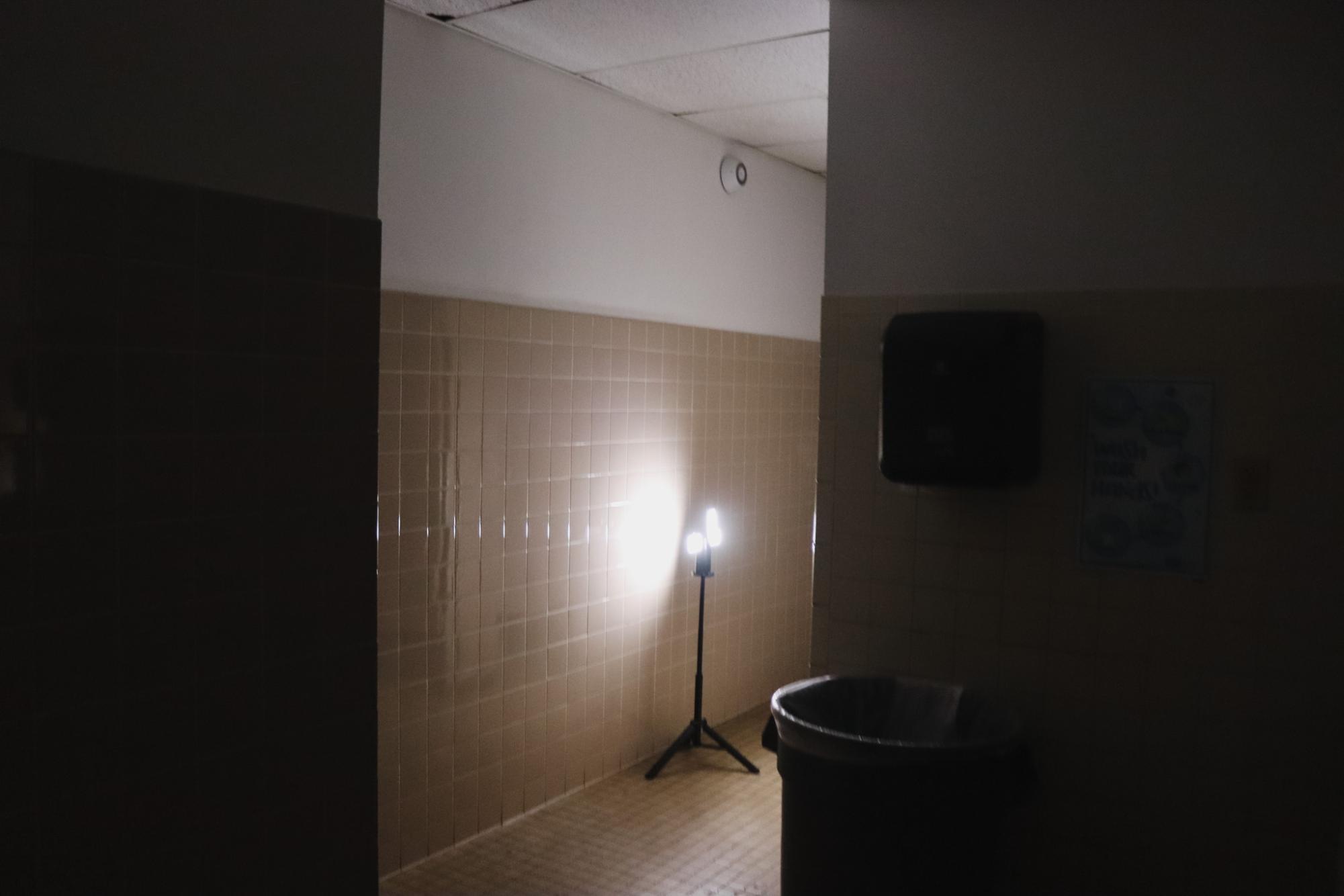
To maintain safety and comfort on campus, administration said the Academy installed portable lights in restrooms and hallways. Buildings without windows can become dark quickly during outages, requiring temporary lighting to maintain safety.
Once power was restored, the school’s tech staff spent the afternoon rebooting phone and internet systems, while the maintenance crew reset air conditioning fans and timers for outdoor lighting.