







Beneath the shade of the banyan tree, generations of Sacred Hearts Academy students gathered for assemblies, celebrations and everyday moments that graduates say helped shape traditions still felt across campus today.
For alumnae and educators Katherine Francis Miller ’57 and Leilani Asuncion-Tagupa ’91, those memories reflect not only campus traditions from decades past but also the values of faith and community that remain central to the Academy as it continues to grow and change. Miller, who currently serves as the head of campus ministry, and Asuncion-Tagupa, the chair of the theology department, have each worked at the Academy for more than a decade.
“We have to bridge these traditions together because it helps support our Academy’s mission,” Asuncion-Tagupa said, adding that maintaining traditions helps connect generations of students while reinforcing the values of faith, compassion and leadership that define the school community.
Gathering places and early campus life
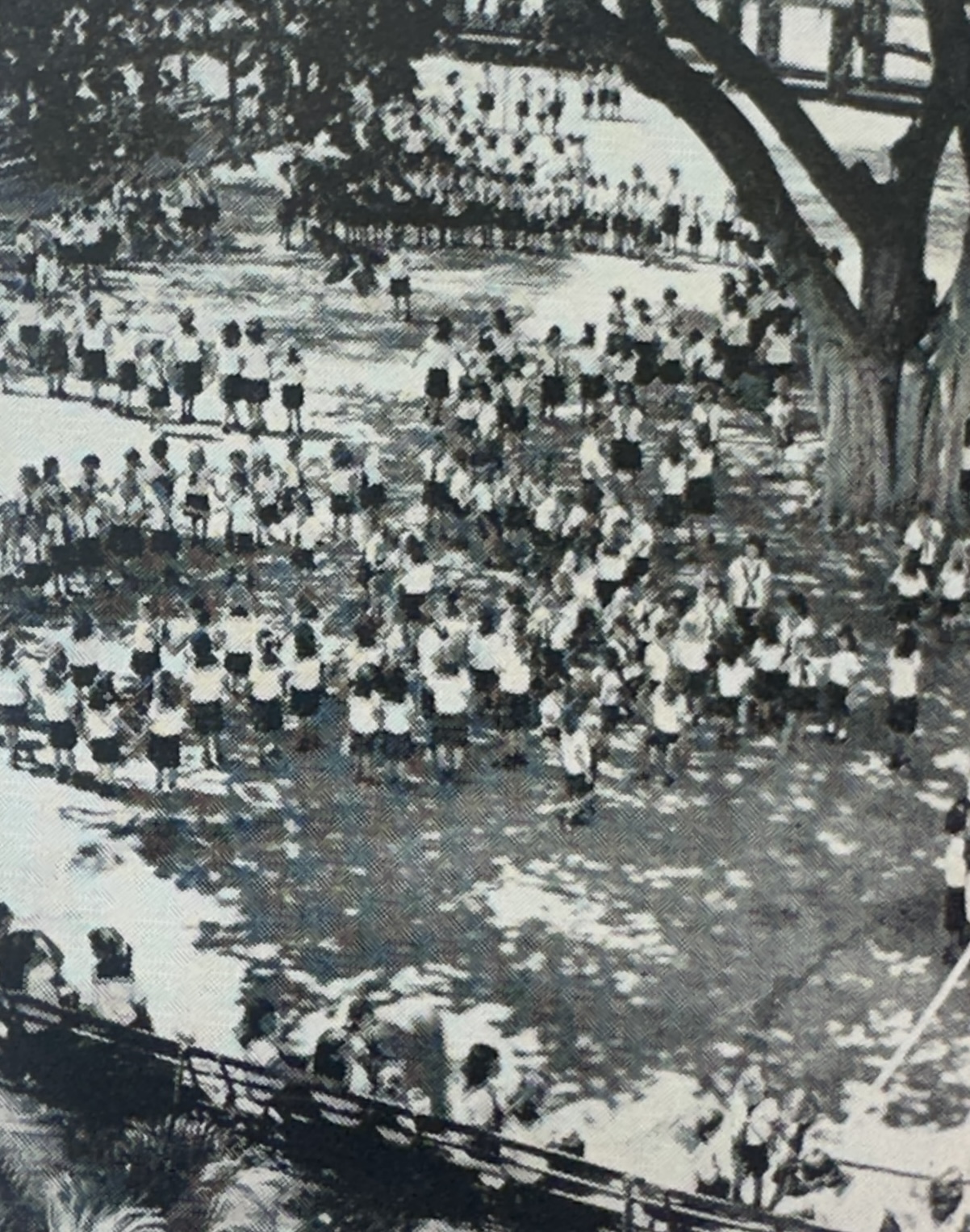
One of those gathering places was the banyan tree, which once stood prominently between the basketball court and the performing arts center. Programs and events were held beneath its branches, creating a shared space where students, faculty and the Sisters of the Sacred Hearts came together.
Although the tree itself no longer stands, parts of it still live on within the school today. According to Asuncion-Tagupa, wood from the tree was preserved and used to create the oratory that is now classroom A210.
Miller said the banyan tree also came to represent how the Academy’s traditions continue to grow over time.
“Just as the tree grows and spreads throughout the islands, so will the school’s faith and traditions spread,” Miller said.
These traditions date back to the Academy’s earliest years. Founded by French sisters who maintained communication with the French government, the school once had a pier with a dock reserved for large sailing ships. Through invitations extended by the sisters, ship captains would visit campus, prepare special programs and offer training opportunities for students interested in becoming sailors. While these maritime connections no longer exist today, alumnae reflect how the Academy’s early traditions extended beyond the campus.
While the Academy maintained connections beyond Hawaii, daily student life remained grounded in shared responsibility and community. When Miller attended the Academy as a student, the campus included an entire farm where boarding students worked together to grow vegetables and fruit and raise livestock such as rabbits and chickens.
Students gathered eggs from the chickens, which were then cooked and served at breakfast. According to Miller, these experiences helped students understand the value of caring for the land and for one another.
“There’s that connection with being able to produce something that will benefit people,” Miller said. “So you’re also taking care of creation.”
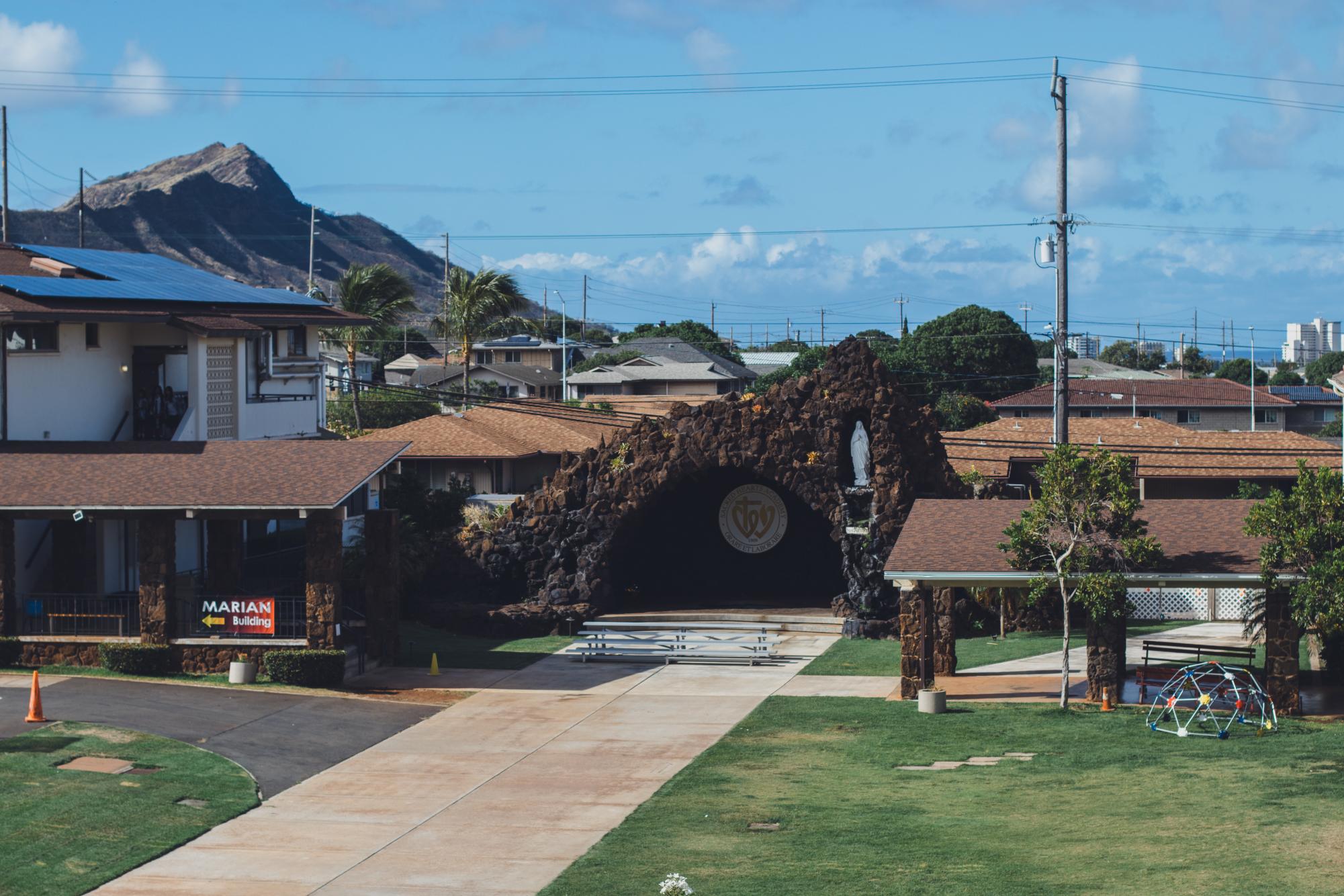
The farm area was later cleared to make space for the lower school buildings and today remains a grassy area near the student center.
Alongside daily work and shared responsibilities, faith also played a central role in student life.
The sisters once lived in the chapel and rotated every half hour during adoration. They wore red mantles, a sight that left a lasting impression on Miller when she was a student.
Although many of these practices belong to earlier decades, the Sisters of the Sacred Hearts continue to influence the Academy today. Many of the sisters now reside at Regina Pacis Convent across from campus on Fifth Avenue and remain closely connected to the school community.
Asuncion-Tagupa noted that campus facilities have also evolved as the school continues to grow.
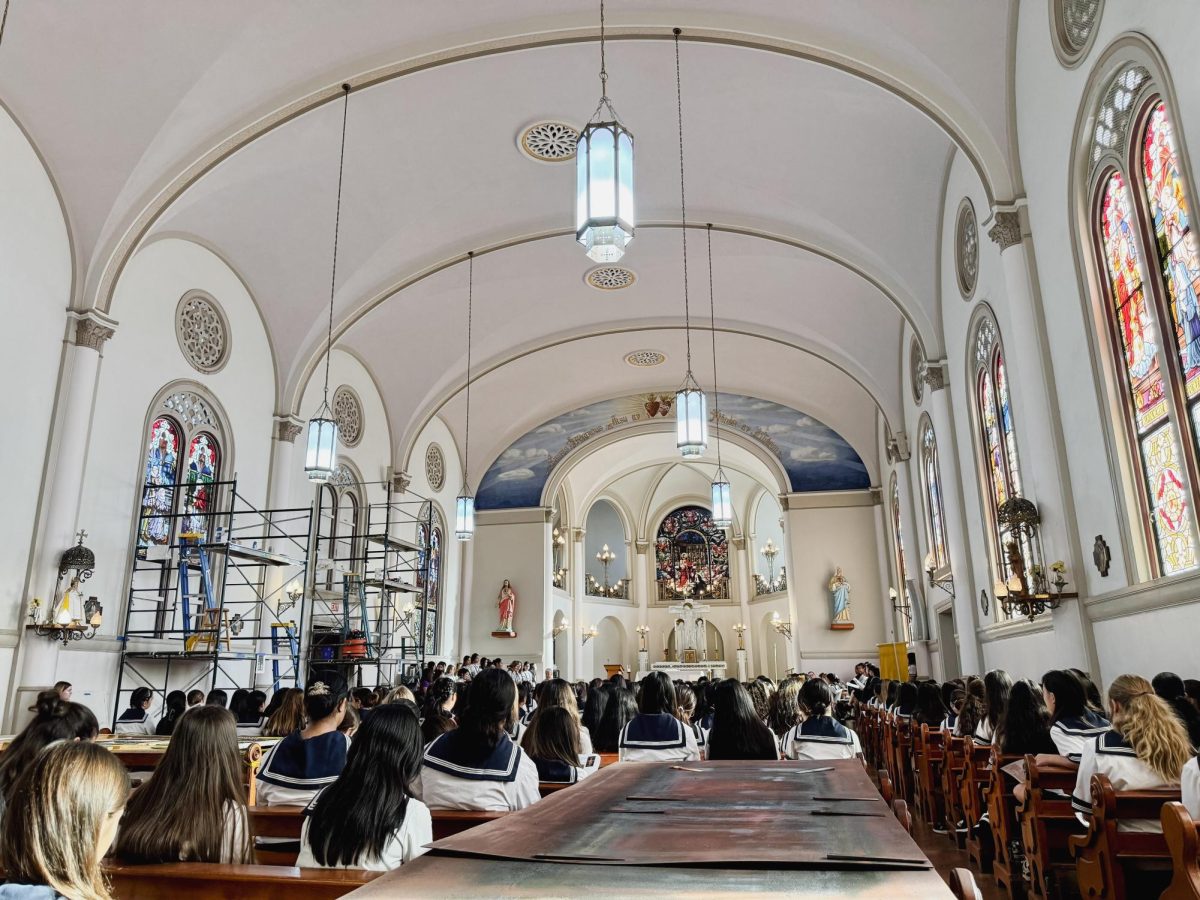
“We’re already in one city block,” she said, explaining that renovations and expansions often depend on available space and specialized resources. For example, restoration work in the chapel requires a stained-glass specialist to repair the original windows.
Traditions and ceremonies through the years
As the campus evolved physically, many traditions continued through ceremonies and school events that mark important moments in students’ lives.
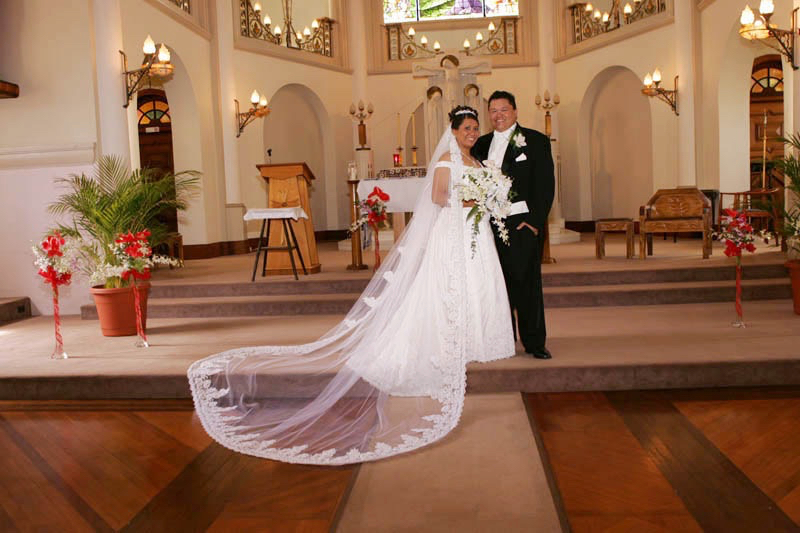
One example is the tradition of alumnae weddings held in the St. Margaret Mary Chapel, located at the front of the school. Asuncion-Tagupa married there on July 9, 2005, which is also when the Catholic community celebrates the feast day of Our Lady of Peace.
“The date was chosen by my husband,” she said. “If you think about it, only graduates can get married here. It’s special because our wedding is stacked upon other memories that I’ve had while growing up.”
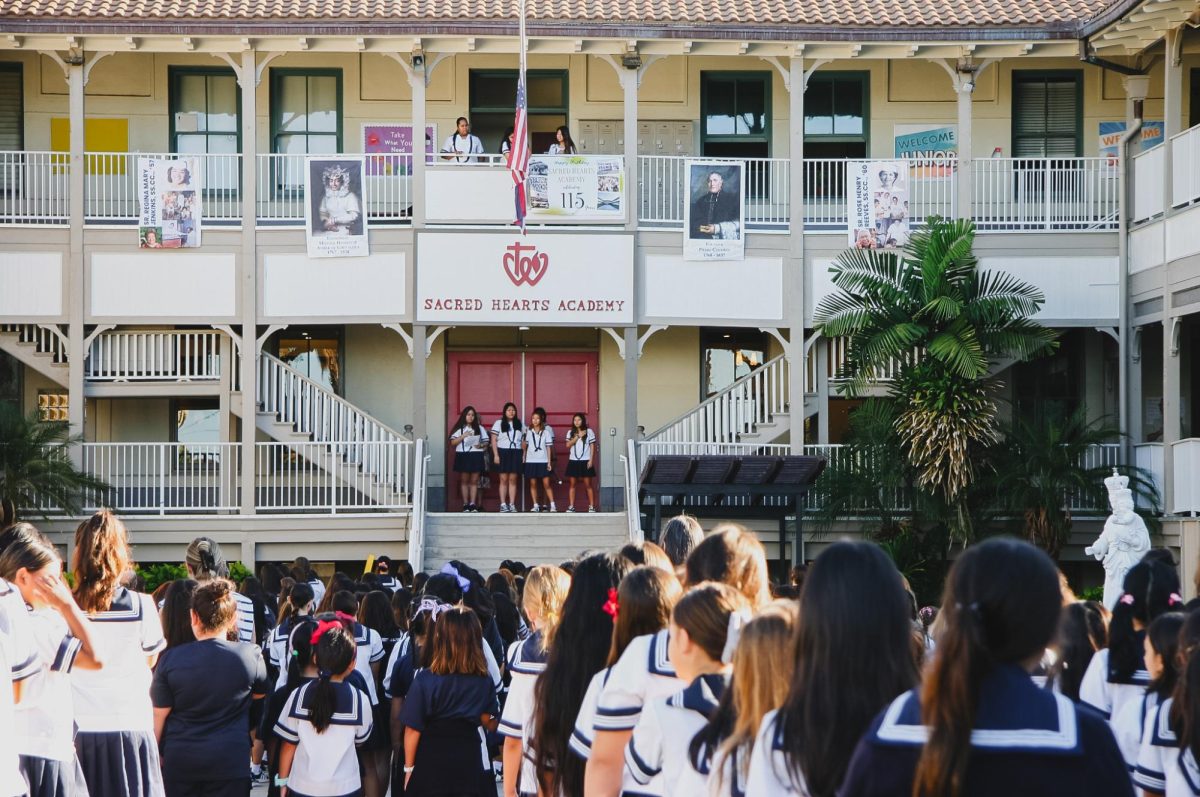
Other traditions continue to shape the student experience as well. The Junior Ring Ceremony, where students receive their junior rings or pins, remains a milestone celebration for upper school students.
School events such as Life Walk have also evolved over time. In earlier years, students walked from campus through Kahala neighborhoods and toward lookout points before returning. Seniors often ended the day with a beach outing.
Today, the route is shorter. Upper school students walk about 20 to 25 minutes to Kapaolono Community Park, where grade levels rotate through games such as basketball, volleyball, tug-of-war, relay races and ships and sailors.
The event continues to emphasize community building while adapting to current safety and logistical considerations.
Beyond schoolwide events like Life Walk, mentorship traditions have also helped shape student life at the Academy. One of the most well-known is the Big Sister–Little Sister tradition, which pairs junior “big sisters” with incoming freshmen as a way to welcome them into the high school community.
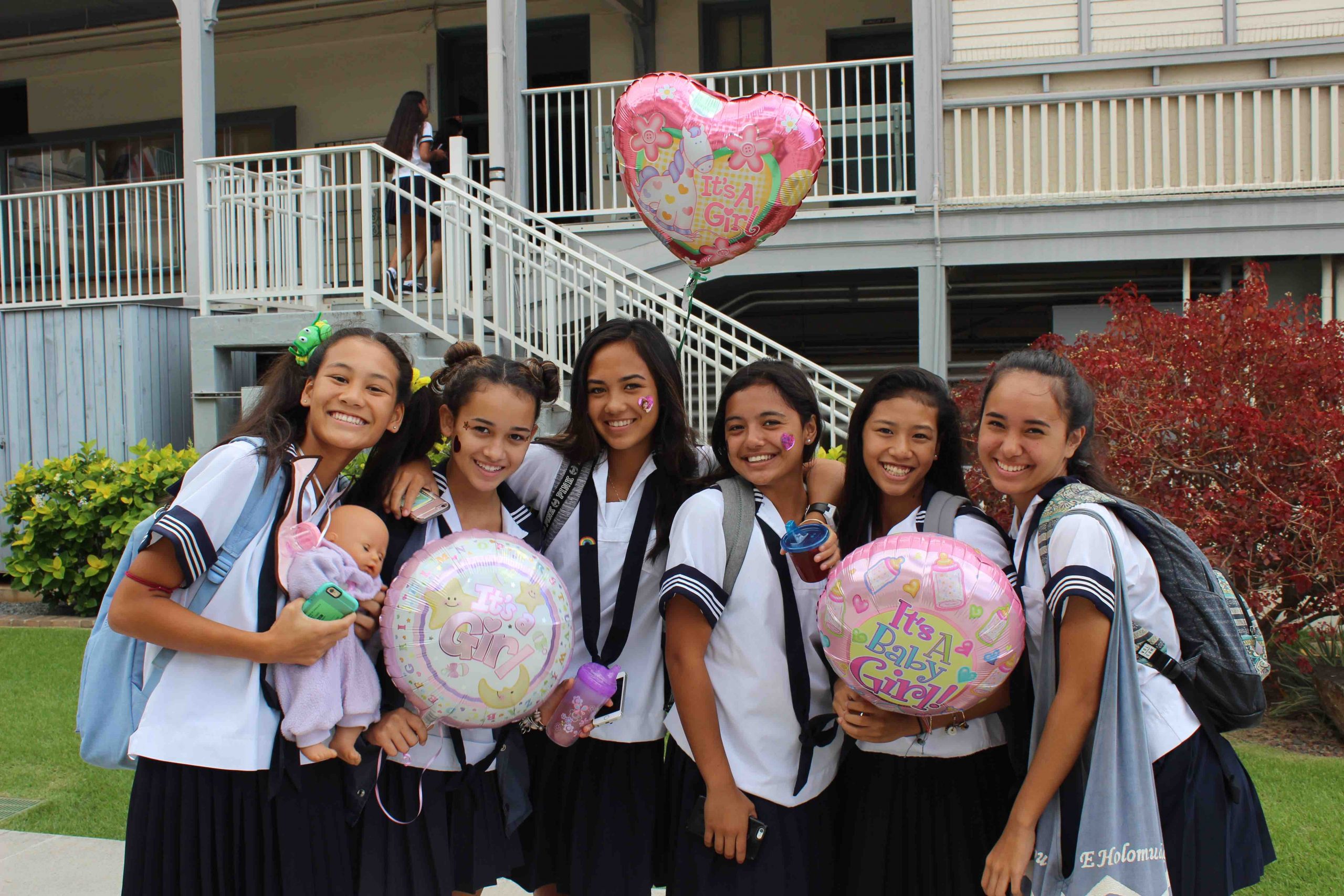
In earlier years, big sisters frequently checked in with their little sisters and organized activities throughout the school year. Today, the program continues with structured monthly check-ins and shared activities designed to build connections across grade levels.
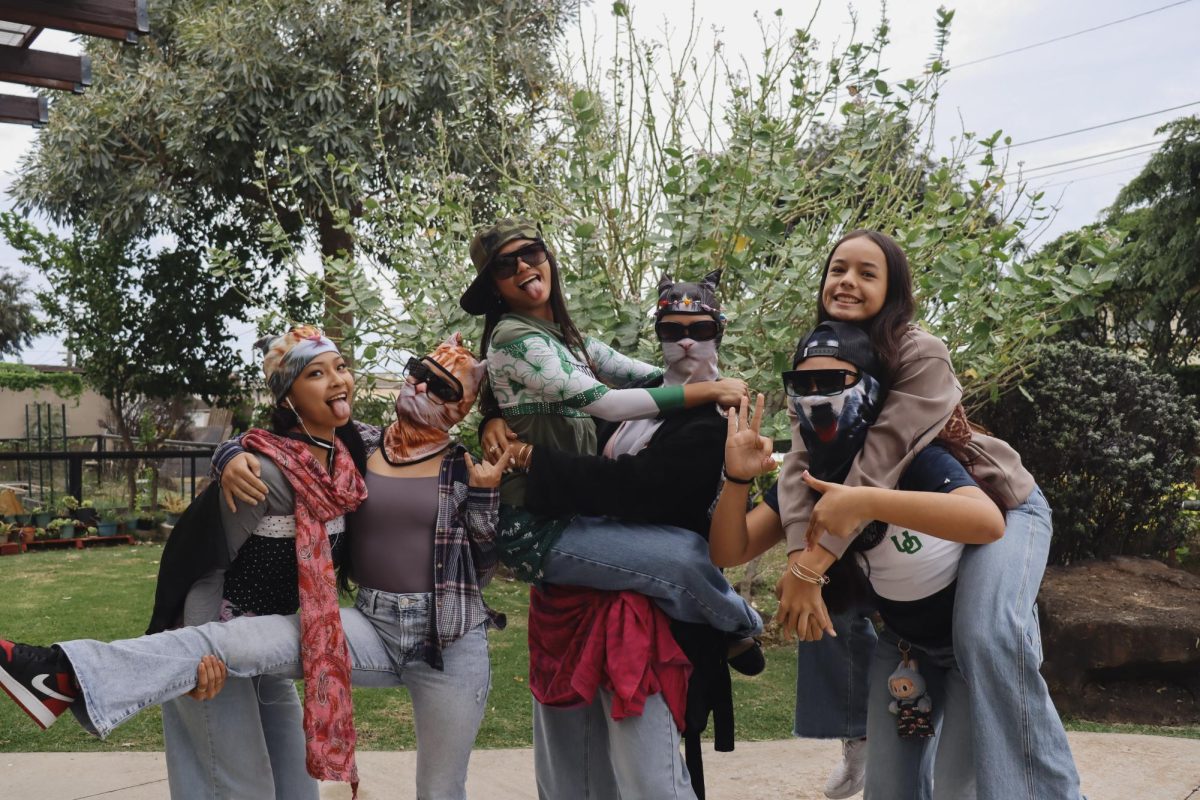
For many students, the highlight of the tradition is the Freshman Initiation assembly. Big sisters help freshmen learn a choreographed dance to a song medley, which the freshmen perform in front of the school while big sisters cheer them on with decorated signs.
“Freshman Initiation made me feel really welcomed and helped me transition into high school by getting to know my peers better,” sophomore Araceli Keaulii said. Last year, her group performed to “Girls Just Want to Have Fun” by Cyndi Lauper and a Michael Jackson medley. They wore white shirts, black pants and a red accessory.
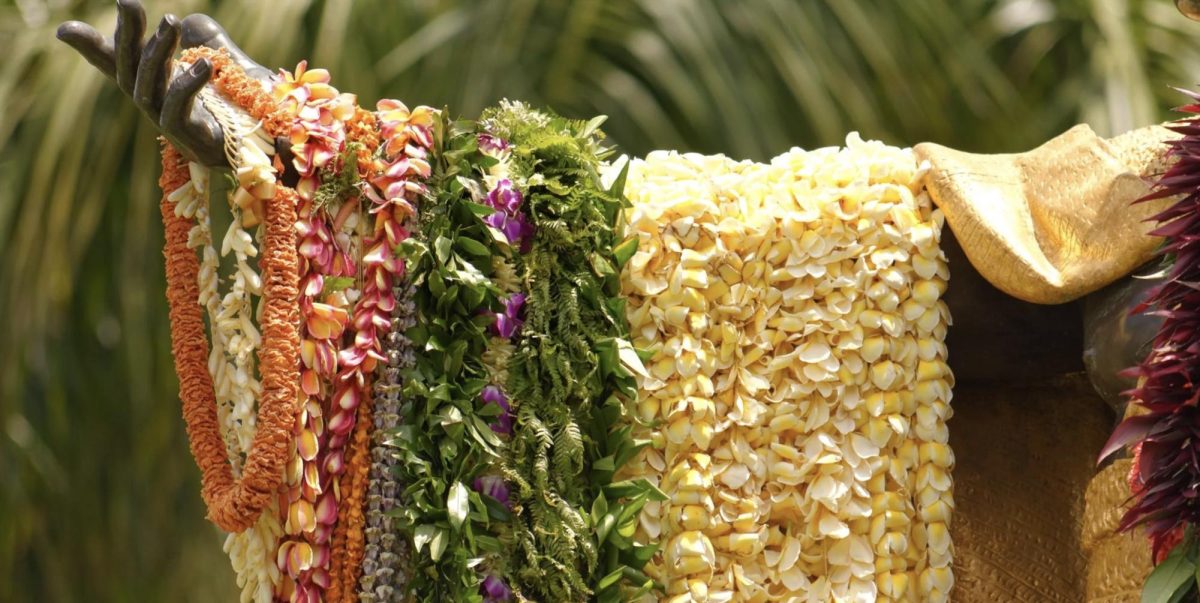
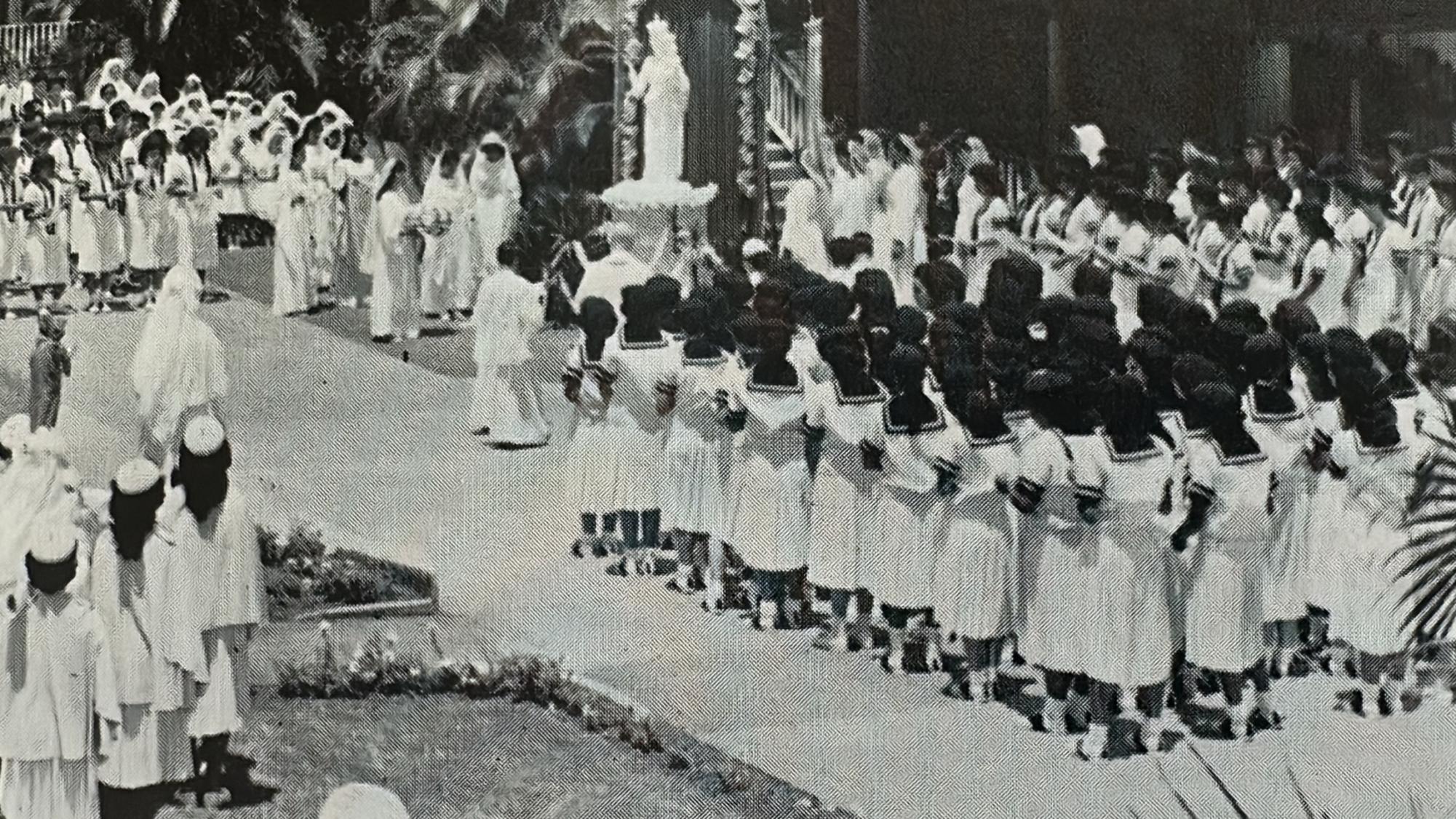
Religious processions were also once common on campus. Students participated in ceremonial events that included decorated floats and floral displays carried from the administration area to the grotto, reflecting the strong Marian traditions of the school.
Music, Mass and performing arts traditions
Music has also long been an important part of the Academy’s religious traditions and campus gatherings.
When Miller was a student, Masses featured songs in Latin and French performed in three-part harmony. At the time, students were required to learn Latin and French.
Over time, the style of worship music has changed. Miller noted that today’s students often prefer a more energetic style of worship.
“The young people like things like praise and worship, where they sing a lot of songs and jump up and down,” Miller said.
In the past, she explained, the style of worship was more formal and quiet. Despite those changes, Miller said the spiritual purpose of Mass has remained the same.
“It’s the same in the sense that it is still the inner spirit of the person trying to reach God, and God reaching down into the spirit of the person,” Miller said.
Morning adoration was once held in the chapel, and students sometimes received demerits if they forgot to bring their songbooks, tams or berets.
As enrollment increased over the years, monthly Masses transitioned from the chapel to the gym to accommodate larger groups of students. The chapel continues to be used for singing practices and graduation ceremonies.
The Academy also holds a Second Friday Morning Mass in the chapel, which is open to the community. Lower school students celebrate a separate monthly Mass.
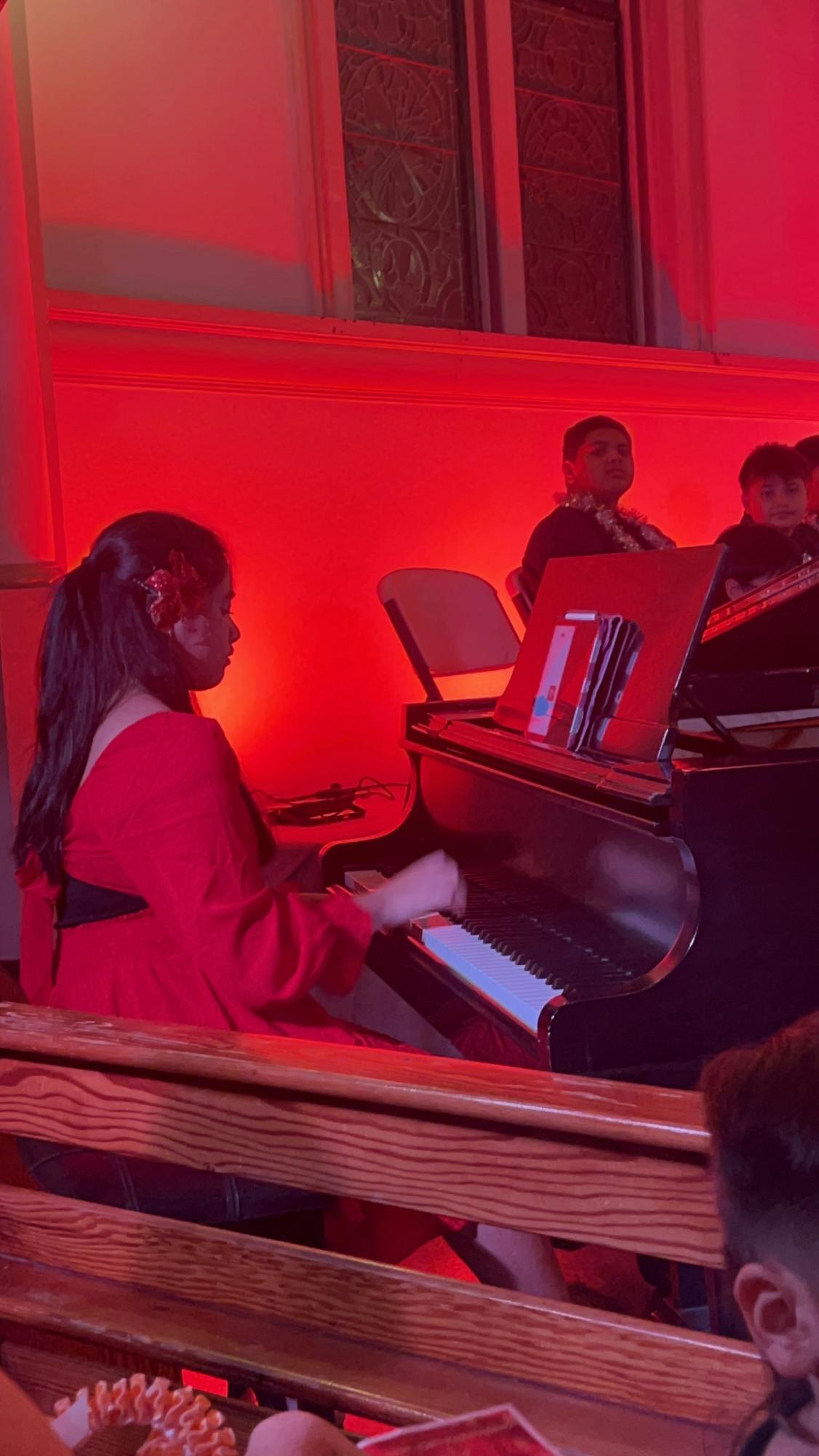
Music in the chapel also carries a long-standing tradition through its historic piano. Senior Rochelle Narciso, who frequently plays the piano during Mass and song practice, said performing on the instrument connects her to generations of students before her.
“In a way, it’s an honor to play a piano that has survived the test of time,” Narciso said. “It’s amazing thinking about the many hands that have played it before me.”
Still, she said the instrument feels familiar after years of practice.
“I treat it like any other piano because I’ve played it for so long,” she said.
Narciso also plays at Saint Anthony of Padua Parish in Kalihi, where she serves as a pianist and cantor. She said accompanying students as they sing is what makes the experience most meaningful.
“I’m honored to help elevate our praises with music,” she said.
Changes in school attire
While music and worship remain central to campus traditions, other customs were reflected in how students dressed for school and religious events.
In earlier decades, students wore more formal clothing on campus. Business attire often included a blouse, jacket and skirt or pants paired with heels. For Mass, students wore tams or berets.
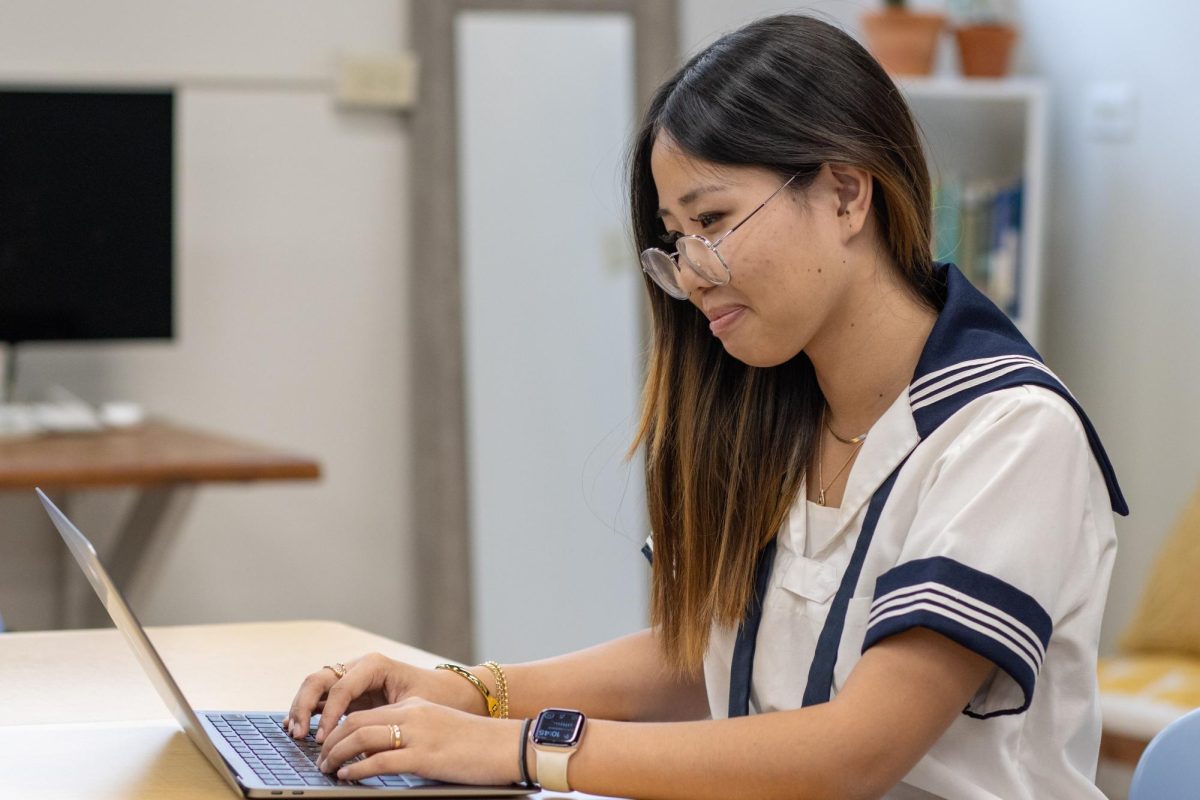
Today’s dress code offers more flexibility while still maintaining a sense of school identity. From Monday through Thursday, students typically wear blue skirts with closed-toe black shoes. On Fridays, students may wear khaki pants and blue polo shirts. Division T-shirts are occasionally worn during school activities.
A campus seen beyond the classroom
Beyond school traditions and daily routines, the Academy’s historic campus has also drawn attention beyond the school community.
Over the years, its buildings and courtyards have appeared in several television productions. Scenes from the television series “Lost,” which aired from 2004 to 2010, were filmed on campus, including inside the chapel. The series “Hawaii Five-0” also filmed scenes near the front parking lot and upper school offices during its early seasons.
Although the banyan tree no longer stands on campus, many say that the traditions once rooted beneath its branches continue to shape the Academy community today.