







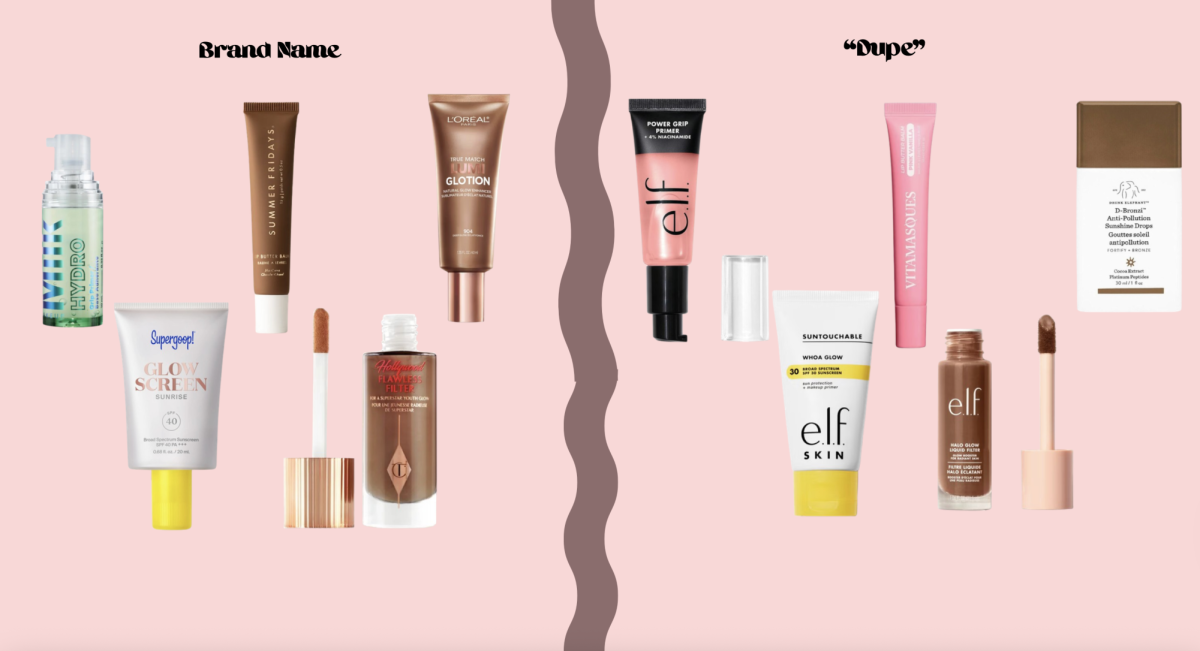
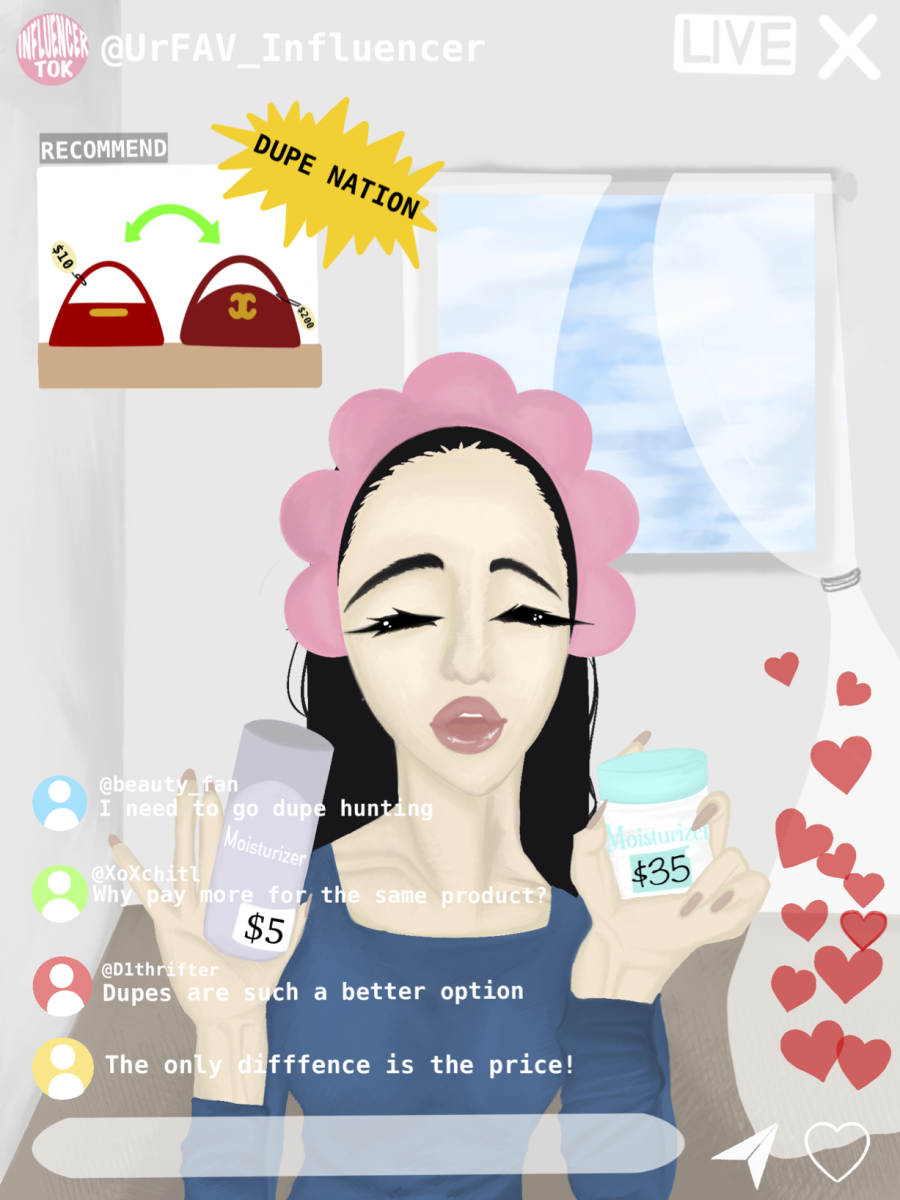



In the editorial cartoon, a beauty influencer goes live on a fictional platform labeled “Influencer-Tok,” highlighting the issue of “dupe culture” on social media. During the livestream, the influencer holds up two moisturizer products — a $5 dupe and a $35 brand-name version — while comparing their prices and suggesting that the lower-cost option offers a similar result. As the broadcast continues, viewers’ comments appear on the screen, with several followers agreeing that dupes are the better choice and questioning why consumers would pay more for the original product when a cheaper alternative exists. Animated hearts and reactions along the side of the screen suggest strong engagement from the influencer’s audience.
The livestream interface also shows algorithm-driven recommendations, including advertisements for additional dupe products appearing on the user’s screen. These suggested items reflect how social media platforms often promote similar content based on user behavior, further reinforcing trends such as the growing popularity of dupes in beauty and fashion markets.
The illustration reflects a broader shift in online consumer culture, where influencers and users frequently compare lower-priced alternatives to name-brand products. The trend has gained traction among young consumers, particularly through social media platforms where product comparisons, reviews and recommendations can quickly reach large audiences.
At the same time, the cartoon also underscores how increased time spent on digital platforms has amplified the influence of online trends and marketing. Since the COVID-19 pandemic, researchers have found that adolescents’ recreational screen time nearly doubled from about 3.8 hours per day to 7.7 hours, helping normalize frequent use of smartphones and social media in everyday life.
To read more about dupe culture, find the story here.