











Once, at a conference on institutions to eradicate hate in schools, a guest speaker told the story of the greeting used by the Masai people of Kenya and Tanzania: “Kasserian ingera?” The response: “Sapati ingera.” Translated, these mean “And how are the children?” and “The children are well.” The Masai believed that the true measure of a community’s well-being lies within that of its children. A community where the children are happy, fed, and learning is a developed community.
Walk the halls of any middle or high school in 2025, and you will catch a glimpse of our collective future. The beliefs, reactions to change, consumption, activism, and slang of our society’s youth tell us where we are and where we’re headed. Which is why the epidemic of teens monotonously droning around while making twitchy hand movements, murmuring six-seven feels less like linguistic innovation and more like an ominous signal.
Teenagers have long been the silent innovators at the forefront of linguistic change. In Shakespeare’s England, women and youth were seldom included in the literary mainstream. Research shows that female writers from the 15th to 17th centuries were much more likely to adopt and pick up on modern language. According to sociolinguist William Labov in his book “Principles of Linguistic Change,” Women led up to 90 percent of all linguistic changes.
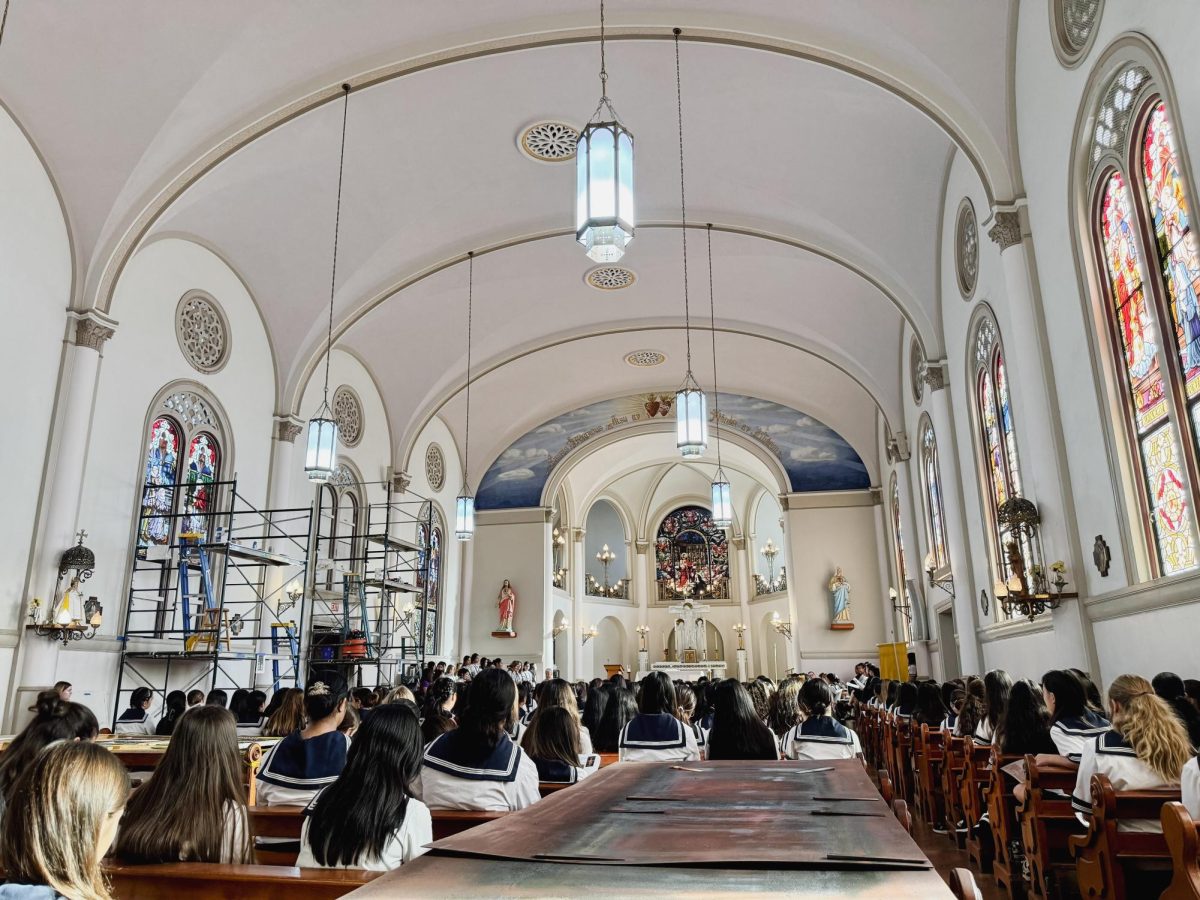
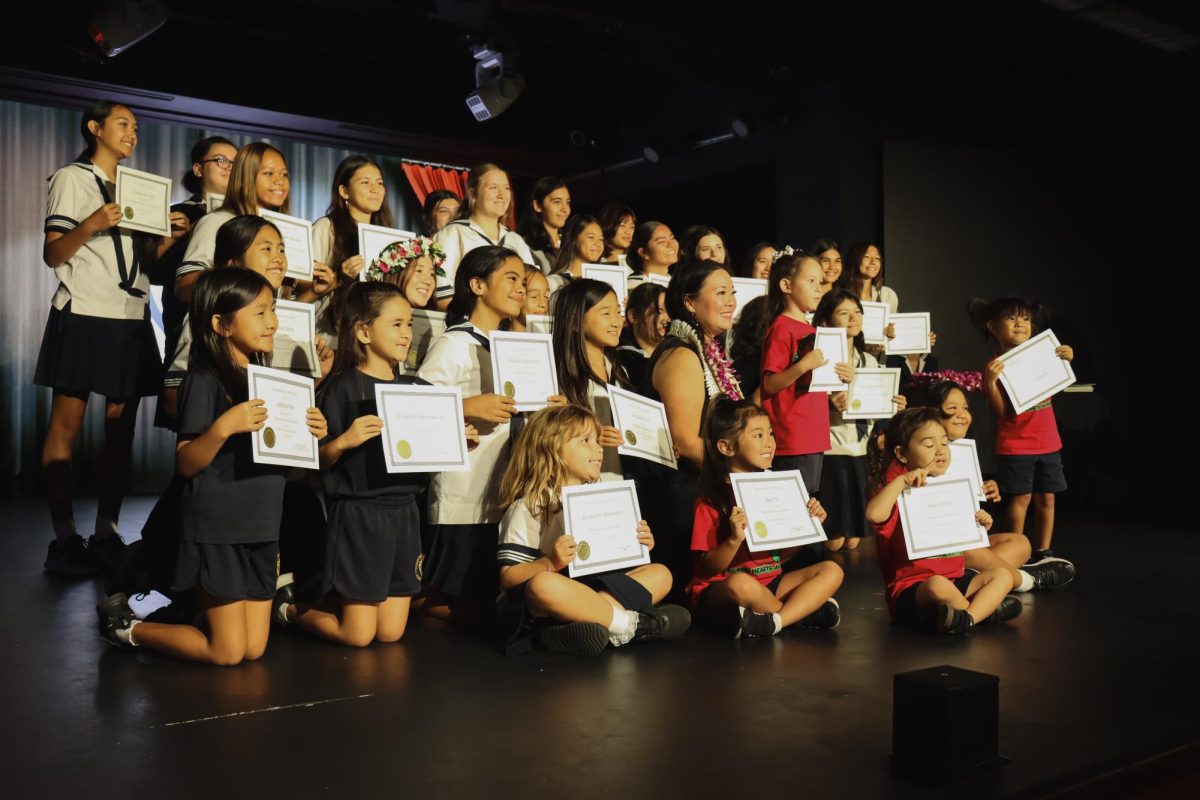
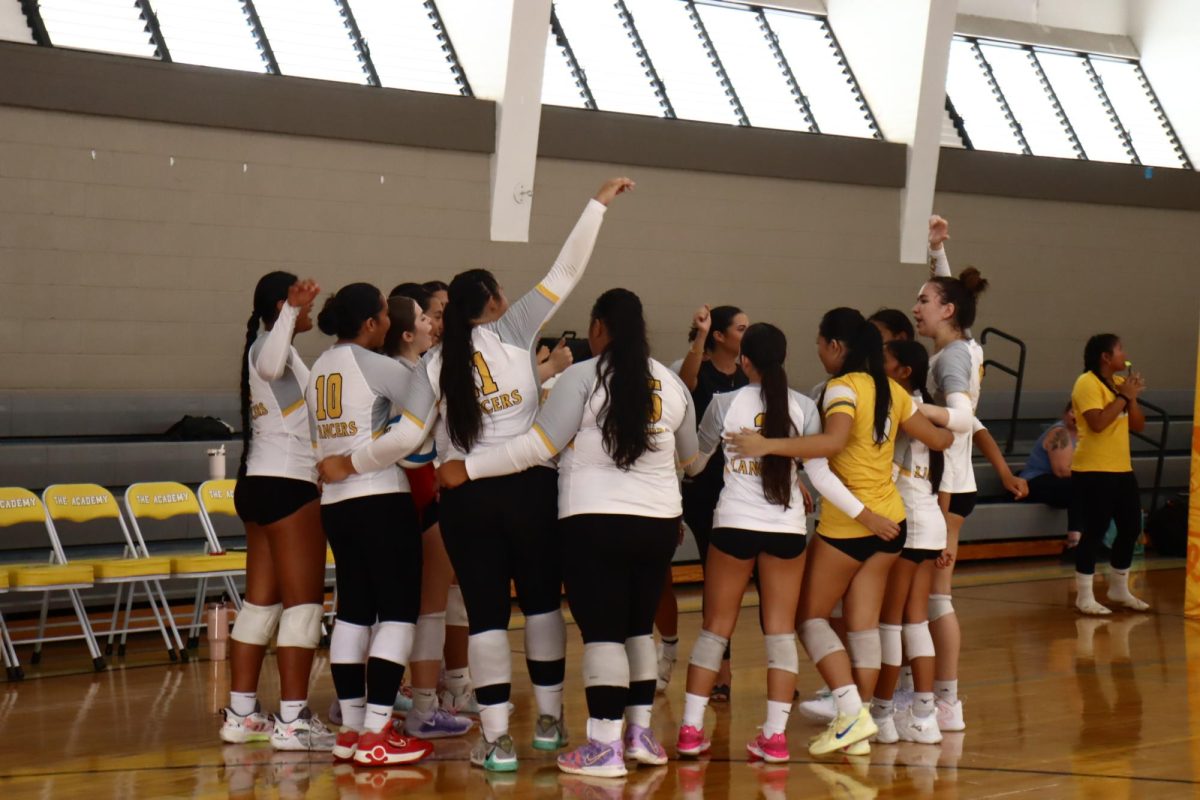
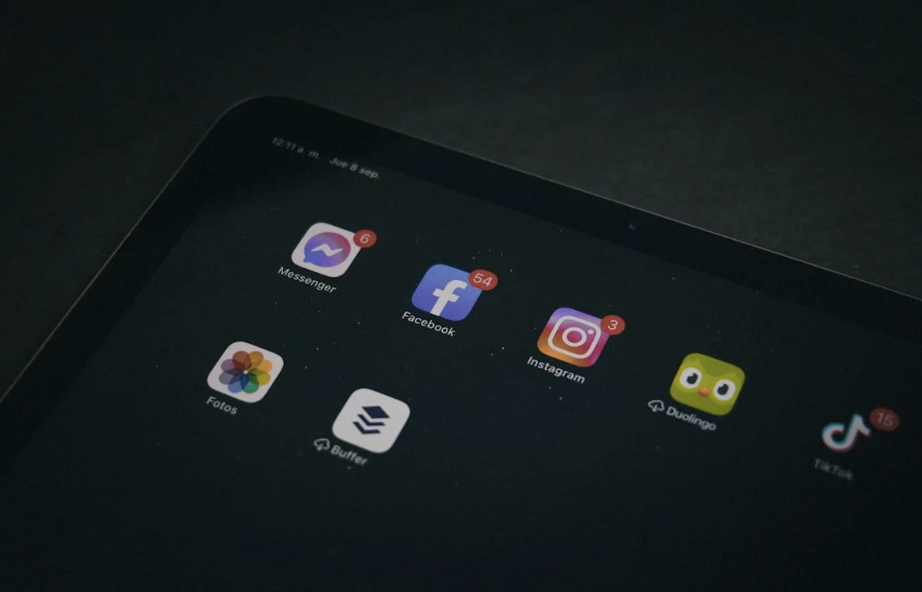
But “six seven” represents something different altogether. Unlike previous slang that emerged organically from subcultures or creative wordplay, this phrase spread with unprecedented speed through social media algorithms, primarily TikTok and Instagram Reels. Within weeks, millions of teenagers had adopted not just the phrase but the physical performance that accompanies it—the jerky hand gestures, the deadpan delivery, the seeming compulsion to insert it into every conversation regardless of context. At Sacred Hearts, the phrase had a slow incline with few students aware of the trend in January 2025, but has had a subtle increase with its peak popularity in the summer of 2025, and now is starting to dwindle as adults pick up on the trend. At the Academy, students share side eyes in class and quick gestures with the number is said casually in conversation.
The phrase “six seven” operates on several linguistic levels simultaneously. First, it functions as a “floating signifier”, a term whose meaning is deliberately ambiguous or constantly shifting. Ask ten teenagers what “67” means, and you’ll get eleven answers: a reference to a UK drill rapper, a code for a specific emotion, a reference to a certain-heighted basketball player, or simply nonsense that’s funny because of its absurdity.
This semantic emptiness is precisely what makes it so adaptable. “67” can be inserted into nearly any conversational context as an exclamation, a response, a greeting, or a non-sequitur. It requires no setup, carries no specific meaning that might become dated, and demands no particular knowledge to deploy.
Secondly, as all slang is, the term is a unifier, which means it is simultaneously exclusionary; it holds meaning and value that, once understood, becomes a symbol of being a part of the ingroup. It is worth noting that some linguists see this as a positive, arguing that this democratization of slang through social media strengthens communities and provides inclusivity across geographic and class boundaries. While this perspective has merit because afterall now, like no time before, you don’t have to be a cool nepo-baby who lives in Manhattan to be in on the joke; you can be a middle-class 16-year-old from a family in the rural Midwest. The exclusionary function hasn’t ceased —- it’s shifted because now the barrier to entry isn’t geography or social class, but rather awareness and platform access.
Though the “six-seven” meme has devolved into a meaningless easter egg, its origin truly lies in a joke about “clip farming,” where teenage basketball players would, regardless of the question, reply with six-seven with the hope of being turned into a TikTok edit.
My hypothesis? The rise of “brainrot” “nonsensical terms” represents the logical endpoint of a media ecosystem shaped by late-stage capitalism, where every interaction is an opportunity for growth and monetisation. Some might argue that absurdist slang is harmless fun or a form of communication that builds community and allows teenagers to express creativity in a digital landscape. And on the surface, there is comfort in dismissing this speech as a generational quirk. But this take doesn’t question the shift from the slang of previous generations that, while silly, still promoted cognitive awareness and recognizable linguistic structures.
On a deeper level, the shift towards anti-intellectualism and a post-literate society is starting to be reflected in teenagers’ speech, with phrases like “it’s not that deep” or “the curtain was just blue” in reference to the tendencies of literary observers to find meaning where there is none.
In an age of compulsive content consumption, the phrase “six-seven” serves as a shield against sincerity, a way to acknowledge the absurdity of participating in algorithmic responses, while knowing we don’t have the power to stop. It is, in essence, a teenage absurdist rebellion, where the only response to a meaningless world is meaninglessness.
But here lies the critical question: is this resignation or a form of resistance? Is saying “it’s not that serious” or “the curtains were just blue” a form of playful rejection or a decline in media literacy? When teens respond “six-seven” to “How are you?” what are they telling us?
The children are not well. Yet they adapt, and whether their adaptation represents a return to linguistic innovation or the canary in the coal mine signaling the inevitable death of meaningful discourse at the hands of the modern age of technology, remains to be seen. What is an absolute certainty, though, is that when adults ask “Kasserian ingera?” and we reply with a series of animalistic chants and hand movements, this shouldn’t be dismissed as teen frivolity. And instead, as a call to reflection on what society breeds children who find comfort in semantic emptiness.